Bernardin LIGAN
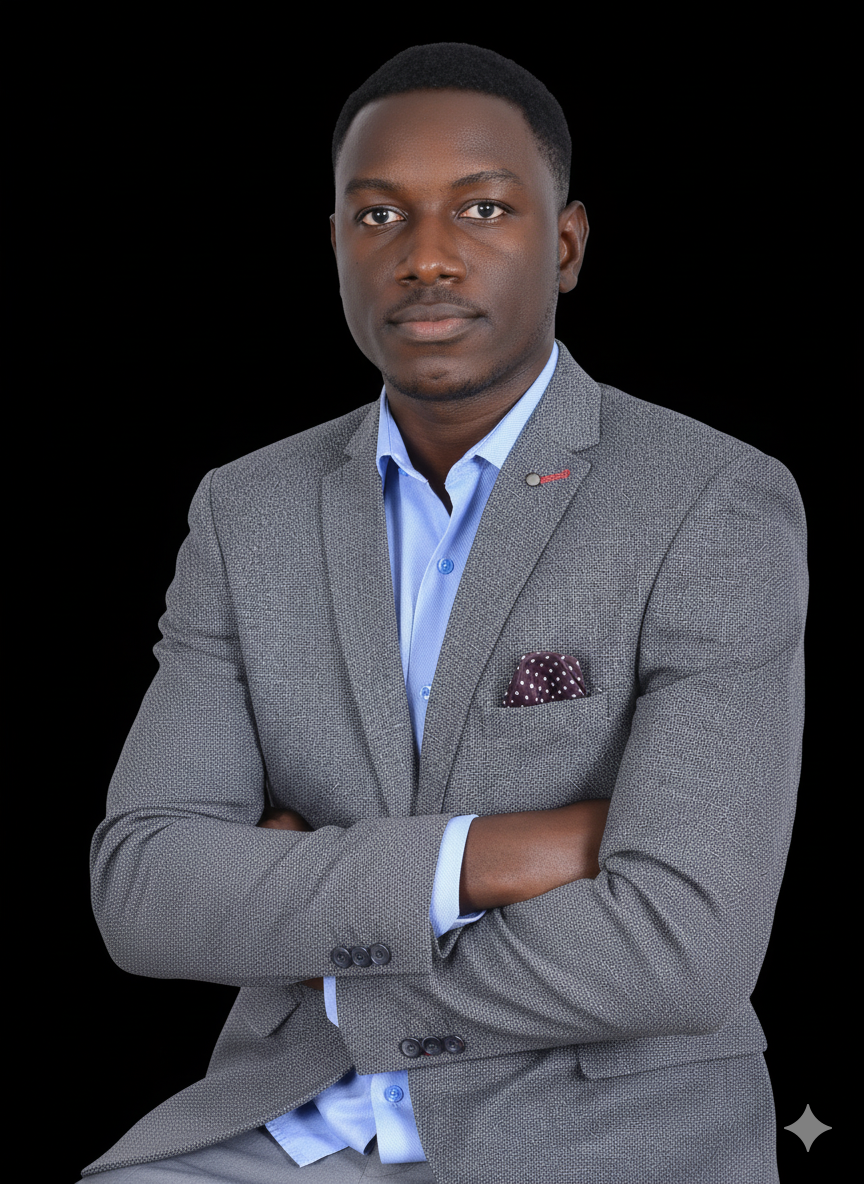
Data Scientist
Interests
- Computer Vision
- Satellite imagery
- MLOps
- Time Series
- AI for SDGs
Contacts



Education
| 2023–2027 | Phd Student : Efficient Deep Learning for Hyperspectral Image tasks | Mohammed VI Polytechnic University (UM6P), Rabat, Morocco |
| 2021–2023 | Master in Modelling and Data Science | Mohammed VI Polytechnic University (UM6P), Ben Guerir, Morocco |
| 2020–2021 | Master 1 TIC | Institut de Mathématiques et de Science Physique, Dangbo-Bénin |
| 2017–2020 | Bachelor in Mathematics-Informatic | Institut de Mathématiques et de Science Physique, Dangbo- Bénin |
Scientific Article
- Parameter-Efficient Fine-Tuning of Multispectral Foundation Models for Hyperspectral Image Classification Arxiv
Teaching Experience
| Jul–Aug 2025 | Lecturer in Artificial Intelligence and Data Science : Taught a course on Artificial Intelligence and Data Science as part of the ARC Summer School organized by The ARC Africa Research Center |
| Since 2024 | Lecturer in Spatial Data Science with Python : Teaching Spatial Data Science with Python as part of the Citizen Data Scientist Program organised by Africitizen |
Industry Experience
Septembre 2023 – Octobre 2023 | Backend GIS-Data Engineer | Valhko
Detailed achievements :
- Identify geospatial data sources
- Design the database architecture with postgis
- Integrate Time Series Data with Timescaleddb
- Design the Backend of the platform with Django Rest Framework and some others django’s GIS modules
- Integrate Swagger Specification (with drf-yasg tool) to automatically generate API’s documentation
- Join all parts of the App by creating services with docker-compose
Mars 2023 – July 2023 | Data Scientist Intern | Center for Remote Sensing Applications (CRSA)
Statistical downscaling of Terrestrial Water Storage (TWS) data from the coarse-resolution GRACE and GRACE-FO
missions. The objective was to apply machine learning models to enhance the spatial resolution of TWS estimates, enabling more accurate assessments of groundwater dynamics in arid and semi-arid environments.
Detailed achievements :
- Collect Satellite data: NDVI, LST, Rainfall, Soilmoisture, TWS
- Preprocess NetCDF images with libraries such as xarray and dask
- Explore the link between the target product and data used as proxies.
- Estimate the target variable as a function of the proxy data using Machine Learning and Deep Learning methods
- Select the best model by using statistical significance tests (Scott-Knott test ) and ranking methods such as Borda count
- Implement a processing scheme for automated remote sensing data downscaling.
- Produce maps of the target variable with an enhanced spatial resolution.
July 2022 – Sept.2022 | Data Scientist Intern | Green Energy Park | Structural Health Monitoring: Development of Deep Learning models for the detection of damage in buildings from Time Series data, collected by sensors
Detailed achievements:
- Collect and prepare Data
- Transform Time Series into images based on methods like Gramian Angular Field, Markov Transition Field, Recurrence Plot
- Build CNN models for each method
- Compare the models and select the best for deployment
Programming Skills
- Data Science/AI : Python, Scikit-learn, Tensorflow, Pytorch
- Cloud : Azure, Azure Machine Learning, Google Cloud (rudiments)
- Devops : CI/CD, Docker, Git, Github, Github Actions
- Front End : HTML, CSS, Vuejs, Axios, Streamlit, Gradio
- Back End : Django, Django Rest Framework, FastApi
- GIS : Geopandas, xarray, Leafmap, QGIS
Training and Certifications
- Azure Data Scientist Associate, Microsoft, Link
- Tensorflow Developer Certificate, Google, Link
- PyTorch for Deep Learning in 2023: Zero to Mastery, Udemy, Link
- Optimize TensorFlow Models For Deployment with TensorRT, Coursera, Link
- Spécialisation Google IT Automation with Python, Coursera, Link
- Deep Learning Computer Vision CNN OpenCV Yolo SSD GANs, Udemy, Link
- The Complete Guide to Django Rest Framework and Vuejs, Udemy, Link
- Python in Containers, Udemy, Link
Blog articles
- How I Rebuilt My First LULC Project with a Vision Transformer and Clean Code
- From Model to Map: Automating Land Use Classification with Vision Transformers, Google Earth Engine and Folium
- Free Offline Speech Recognition with Vosk
Hackathons
- First Prize SAS Hackathon: Creation with my team of the best Fund Raising Amount prediction model using the SAS Viya platform (2021)
Projects
- Land Use and Land Cover Classification using Pytorch and Sentinel 2 Data
Tools Used: Pytorch, Google Earth Engine, Geopandas
- Creation of a website for the detection and rapid assessment of vehicle damage using AI, for car insurance.
Tools used: Tensorflow-Keras, VGG19, Intel OpenVINO™ Toolkit, Django Rest Framework, Vuejs, Axios
- Deployment of an interpretable diabetes prediction application on Google Cloud.
Tools used: Streamlit, Docker, Google Cloud, Scikit-learn, Xgboost, Lightgbm, SHAP Values - eli5
- Realization of an AI-based application, to help people with reduced mobility to perform basic tasks on a computer from their voice
Tools used: Spacy, Vosk, NER (Name Entity Recognition)
- Bitcoin Price Prediction Using Deep Learning
Tools used: N-BEATS (Neural basis expansion analysis for interpretable time series forecasting), Tensorflow
Seminars/Conferences/ Summer School
- 10 July to 18 July/2025 | Advanced School on Foundation Models for Scientific Discovery, ICTP, Trieste, Italy
Fundamentals of Foundation Models: Theory and Practice; Applications in Climate Science, Astrophysics, Material Science and Drug Discovery; Uncertainty Quantification (UQ) methods (to assess and incorporate uncertainty in predictions made by AI models); Explainable and trustworthy AI for Scientific research; Multimodal Learning etc
- 23 June to 27 July 2023 | Climate Change AI(CCAI), Summer School, Virtual
This virtual program provides an overview of how artificial intelligence (AI) and machine learning (ML) can be used to address climate change. Through lectures and tutorials, we learn how AI/ML is employed across different climate-relevant fields/sectors, discuss important considerations for framing/scoping problems, and gain hands-on practice applying AI/ML to climate-relevant problems.
- 23 & 24 May 2023 | African Cities Lab 2023 Summit, Conference, UM6P Morocco / Sèmè City Benin
Several seminars and panels with researchers and decision-makers on topics such as real-time data collection, establishing communication networks to connect devices and people in Africa, data analysis to optimize the management of urban resources, and the creation of basic public services.
- 26 & 27 Jan 2023 | TechInnov Day, Seminar, UM6P Morocco
Two days with eminent researchers in AI like Yann Lecun (his first visit to Africa).
-Day 1) The future of artificial intelligence according to renowned researchers and seasoned industrialists.
-Day 2) The prospects of machine learning including the challenges related to research, academics, and business intelligence -
03 to 05 Nov 2022 AMLD Africa 2022 (Applied Machine Learning Days) Africa, Conference, UM6P Morocco
Club Experience
- Since Nov 2022: Adjunct treasurer of the International Student Club(ISC) of UM6P
- Since Oct 2021: Member of Google Developer Student Club (GDSC) of UM6P